Why Mangos and Berries are Summer’s Best Match
Summer fruit doesn’t need much help. But when ripe mangos and fresh berries come together, the result is one of the season’s most irresistible pairings.
Every berry brings something different to the bowl. Raspberries are bright and tart with a hint of floral flavor. Blueberries are mellow and sweet with a satisfying pop. Strawberries are fragrant and juicy, while blackberries add rich, wine-like depth. Even grapes contribute a crisp bite and refreshing texture.
Fresh mango is what brings it all together. Its juicy sweetness balances tart berries without overwhelming them, while its buttery texture gives the mix something substantial to land on. Instead of competing for attention, mangos make every berry taste a little brighter.
Whether you’re blending smoothies, tossing fruit salads, freezing pops, or threading colorful skewers, mangos and berries are simply one of summer’s best matches.
Here are six ways to enjoy mangos and berries, plus the two techniques that make any of them better.
How to Pick a Ripe Mango
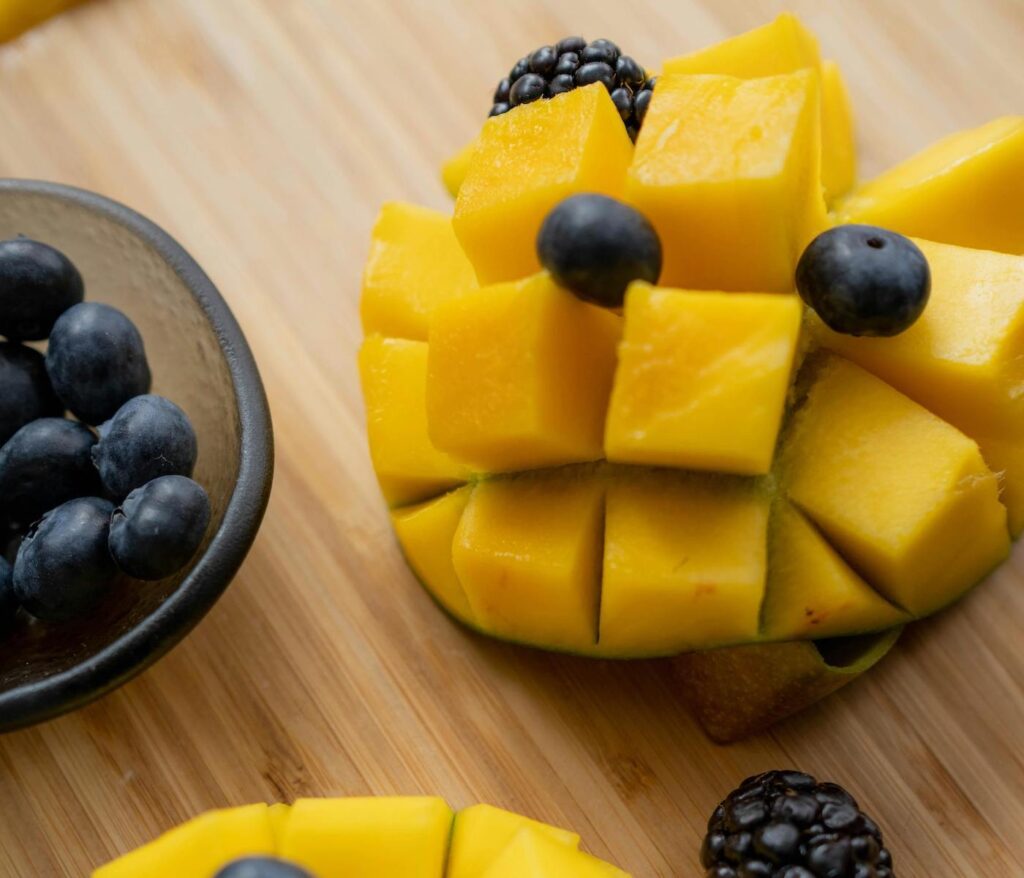
The most common mistake is shopping with your eyes. As the guide on how to choose a mango explains, color is not the best indicator of ripeness — mangos come in a multitude of colors, shapes and sizes, and a red blush tells you nothing about whether the fruit is ready to eat.
Squeeze gently instead. A ripe mango gives slightly. A medium-ripe mango is somewhat firm. An unripe mango is very firm to the touch. If you already pick berries by looking for plump, unbruised fruit, this is the same instinct applied by hand. Ripe mangos will sometimes offer a fruity aroma right at the stem, which is the most enjoyable check of all.
For berry pairings, ripeness is key. Fully ripe, soft mango melts into a smoothie or a pop and reads as pure sweetness. Medium-ripe mango holds its cube shape in a salad or on a skewer and keeps a little tartness of its own, which plays better against sweet strawberries. When the berries you have are very tart, reach for the riper fruit.
The Best Way to Cut a Mango
A mango has one long, flat seed in the center. Once you learn to work around it, the rest is quick. Wash the fruit first and use a clean knife and cutting board.
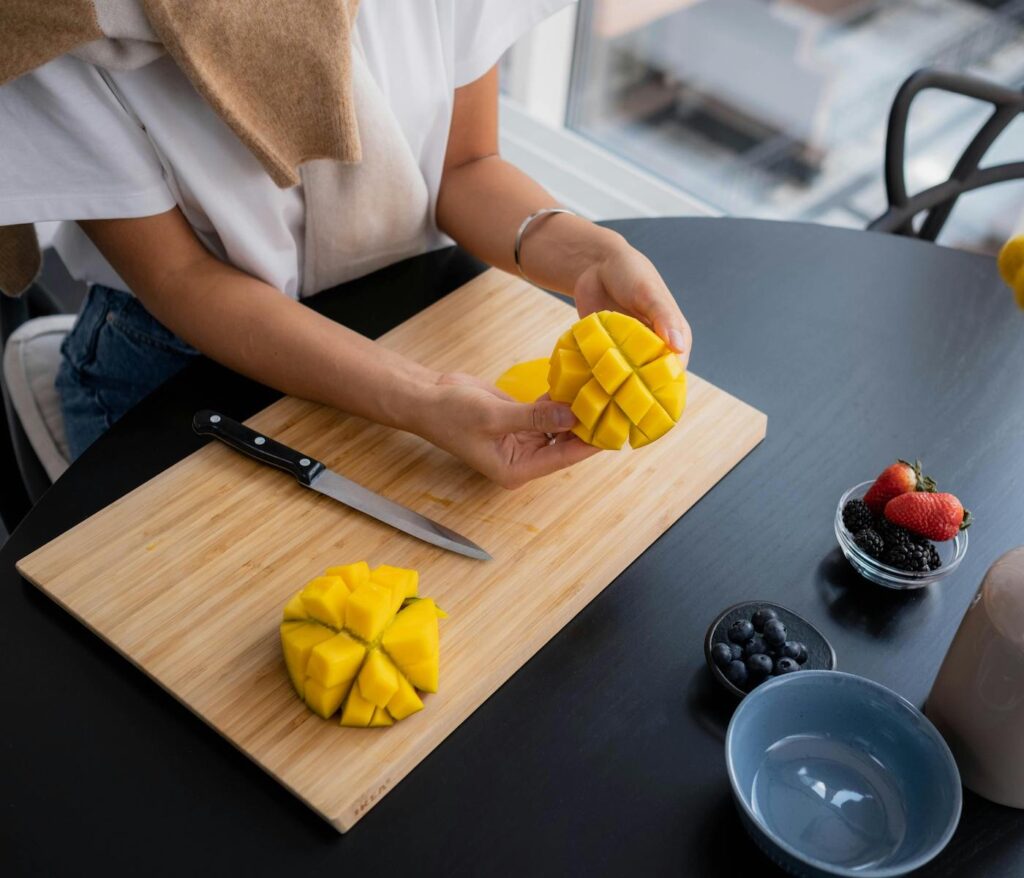
The default method in the how to cut a mango guide is slice and scoop: cut each side just past the seed, about ¼ inch from the center, slice the flesh without breaking the skin, then scoop out the slices with a large spoon. A mango splitter works too — stand the fruit stem-end down and push straight through. For fully ripe fruit, a large spoon will separate flesh from skin on its own. For firmer mangos, a peeler or a careful knife is better.
One practical note for berry dishes: cut your mango cubes roughly berry-sized. When the mango pieces and the blueberries are the same scale, every spoonful gets a bit of everything instead of one dominant flavor at a time.

Mango Nutrition: Healthy Benefits in Every Bite
Fresh mango is a nutrient-dense fruit that provides vitamin C, vitamin A, fiber, folate and antioxidants to support overall health. It also contains carbohydrates for energy and is naturally fat-free, sodium-free and cholesterol-free.
How many calories are in a mango? A whole mango has about 202 calories. A 3/4 cup serving has 70 calories. Each serving provides 19 grams of natural carbohydrates which offer energizing fuel without a calorie overload.
These options come with zero fat, zero sodium and zero cholesterol. The calories from mango bring along powerful nutrients that support wellness at any age.
One serving provides:
- 50 percent of daily vitamin C
- 8 percent of vitamin A
- 8 percent of vitamin B6
- 7 percent of daily fiber
- 15 percent of daily folate
- 15 percent of daily copper
For more on how those nutrients translate into energy, heart health, gut support and immunity, read the naturally invigorating nutrition of mangos, or browse the mango nutrition page.

Easy Mango and Berry Recipes to Try
Mango Berry Pops is the recipe that makes the argument visually. Instead of blending everything into one uniform purée, you build the mold in layers: raspberries pressed into the bottom, diced mango on top of them, blueberries above that, then coconut water whisked with a little light agave nectar poured over and frozen overnight. Each bite hits a different part of the mold, so the flavor genuinely changes as the pop melts — tart, then sweet, then jammy. Eight servings at 118 calories each.

Smoothies Worth Blending
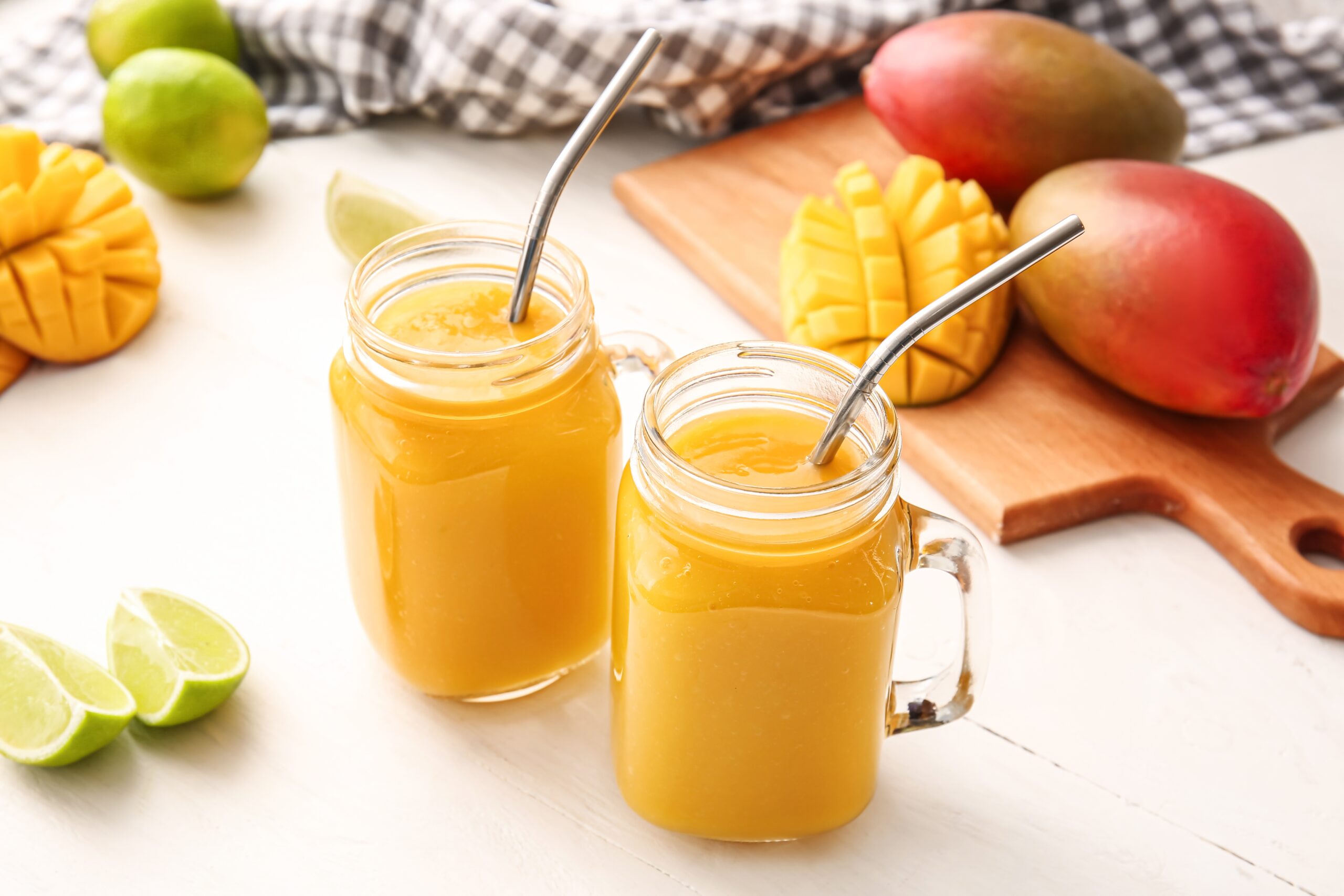
If layering keeps each fruit distinct, blending brings them together. The Mango Berry Lime Smoothie combines a cup of fresh or frozen mango with a full cup of mixed frozen berries — blueberries, strawberries and raspberries — plus a frozen banana, coconut water, plain Greek yogurt, and the juice and zest of half a lime. The lime is the smart move: a little acid on top of already-tart berries sharpens everything and keeps the mango’s sweetness from flattening out.
For something more savory-adjacent, the Mango Smoothie Booster Recipe runs two cups of diced fresh mango with blueberries, strawberries, pineapple, kale, fresh ginger, turmeric, carrot juice and Greek yogurt. Blend on medium for 20 seconds, then high for 30 more. Here the mango is doing heavy lifting — it’s what makes kale and turmeric taste like a smoothie instead of a supplement.

In a Bowl: Let the Fruit Speak
The simplest version is also one of the best. Mango Berry Salad consists of two diced mangos, a half cup each of raspberries and blueberries, two tablespoons of chopped mint, and a dressing of orange juice whisked with a tablespoon or two of honey. Nothing is cooked, nothing is disguised. The mint adds a cool top note that makes the berries taste even brighter.
For kids and parties, Mango Kebabs reduces the idea to its essentials: fresh mango cubes, strawberries, blueberries and grapes slid onto skewers. That’s the entire recipe. It works because you control the order — alternate a tart berry, a mango cube, a sweet one, and every bite down the skewer is a different combination.

On a Plate: Make It Dinner
Berries and mango aren’t just dessert. Mango Berry Rotini Salad turns the pairing into a full meal: whole-wheat rotini tossed with a ripe mango, a cup of raspberries, a cup of blueberries, two cups of baby spinach, and reduced-fat feta, then dressed with olive oil, raspberry vinegar, a little sugar, salt, and poppy seeds. Ten minutes of cooking, four servings, 14 grams of fiber. The feta’s salt and the raspberry vinegar’s acid let sweet fruit sit convincingly in a savory dish.
Build Your Own Combination
Once you hear how the parts work, you can arrange them yourself. Start with mango as the base — roughly half the volume — then add two or three berries chosen for contrast rather than similarity: tart, mellow, and soft. Finish with one sharp accent, whether that’s lime, mint, raspberry vinegar, or a crumble of salty cheese. Change one berry, and the whole thing plays differently, which is the real pleasure of this pairing. There’s no single right combination, just many good ones waiting in the produce aisle.