Mango and Banana Are the Fruit Pairing That Elevates Every Recipe
If you have bananas ripening on the counter and a mango ready to eat, you’re already halfway to breakfast, dessert, or an afternoon snack.
Most people think of these fruits separately, with bananas reserved for smoothies and quick breads and mangos for salsa or fruit salad. But combined, this pair creates one of the most versatile flavor combinations around!
Bananas lend a naturally creamy texture that adds richness and sweetness to smoothies, baked goods, and frozen treats with minimal effort. Fresh mango brings bright sweetness, juicy acidity, and a floral aroma, keeping every bite delicious without being overly rich.
Whether you’re looking for healthy mango and banana recipes, an easy dessert, or a new way to use overripe bananas, these six ideas prove that this simple pairing can do it all.

Why Mango and Banana Make the Perfect Pair
Think of banana as the foundation and mango as the finishing touch.
Banana adds body and natural sweetness, making smoothies thick and baked goods exceptionally moist. Mango balances that richness with vibrant tropical flavor, a juicy texture, and just enough acidity to brighten each recipe.
The result is a combination that’s creamy without feeling heavy and sweet without being one-dimensional.

How to Choose the Best Mango
One of the biggest misconceptions about mangos is that color determines ripeness. It doesn’t. As the guide on how to choose a mango explains, color is not the best indicator of ripeness — mangos come in a multitude of colors, shapes and sizes, and a red blush tells you nothing about whether the fruit is ready to eat.
Squeeze gently instead. A ripe mango yields slightly. A medium-ripe mango is somewhat firm. An unripe mango is very firm to the touch. Ripe mangos sometimes emit a fruity aroma near the stem, which is the most enjoyable check of all.
Match ripeness to the recipe. Fully ripe, soft fruit is best for anything blended or baked. Firmer, medium-ripe fruit holds its shape when you need distinct cubes or long strips. Buy a couple at different stages, and you’re ready for either.
How to Cut a Mango
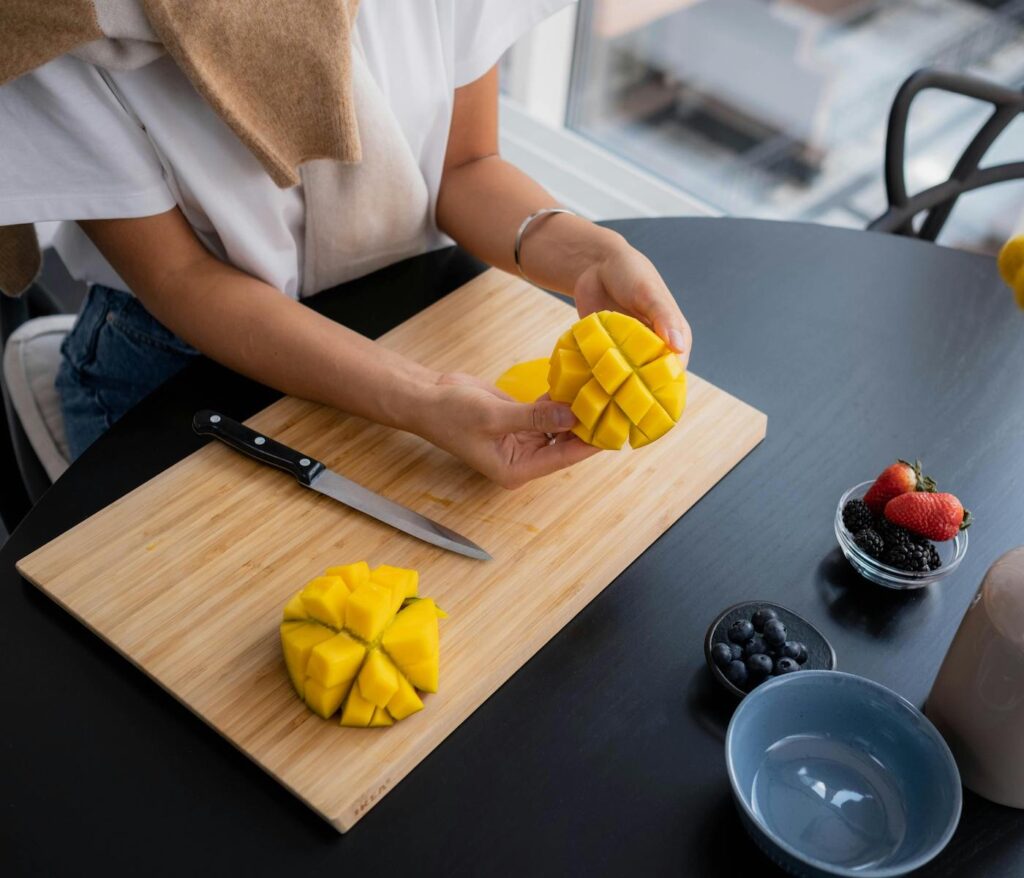
A mango has a single long, flat seed in the center. Once you learn to work around it, the rest is quick. Wash the fruit first, then use a clean knife and cutting board.
The default method in the how to cut a mango guide is slice and scoop: cut each side just past the seed, about ¼ inch from the center, slice the flesh without breaking the skin, then scoop out the slices with a large spoon. A mango splitter works too — stand the fruit stem-end down and push straight through. For fully ripe fruit, a large spoon alone will separate the flesh from the skin. For firmer mangos, a peeler or a careful knife is better, and a vegetable peeler is the exact tool when a recipe calls for thin ribbons instead of cubes.

Mango Nutrition: Sweet Fruit With Plenty of Benefits
Fresh mango is a nutrient-dense fruit that provides vitamin C, vitamin A, fiber, folate and antioxidants to support overall health. It also contains carbohydrates for energy and is naturally fat-free, sodium-free and cholesterol-free.
How many calories are in a mango? A whole mango has about 202 calories. A 3/4 cup serving has 70 calories. Each serving provides 19 grams of natural carbohydrates which offer energizing fuel without a calorie overload.
These options come with zero fat, zero sodium and zero cholesterol. The calories from mango bring along powerful nutrients that support wellness at any age.
One serving provides:
- 50 percent of daily vitamin C
- 8 percent of vitamin A
- 8 percent of vitamin B6
- 7 percent of daily fiber
- 15 percent of daily folate
- 15 percent of daily copper
For more on how those nutrients translate into energy, heart health, gut support and immunity, read the naturally invigorating nutrition of mangos, or browse the mango nutrition page.

In the Blender
This is where the pairing is most obvious: banana makes a fruit drink thick, and mango makes it taste like something.
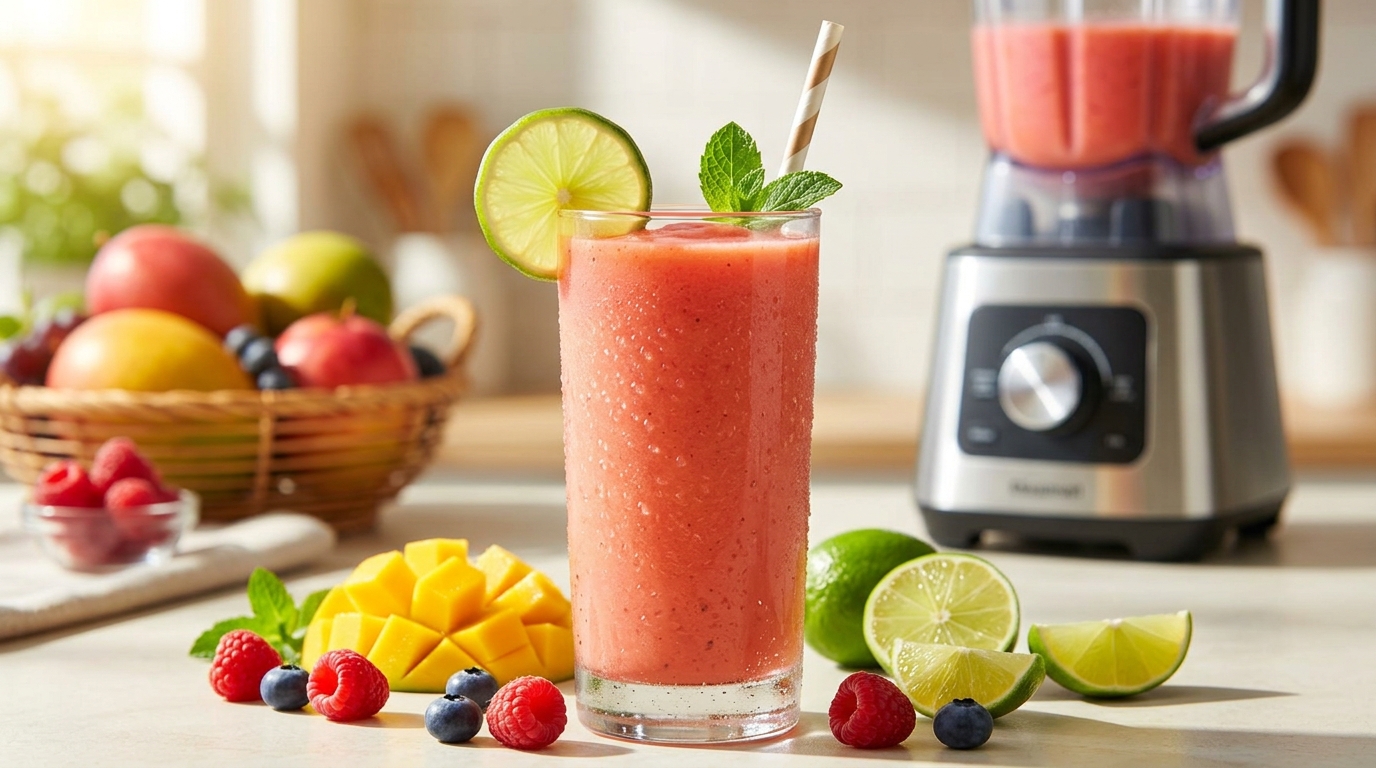
The Mango and Banana Smoothie is the five-minute version — mango, half a banana, low-fat milk, a teaspoon of honey and ice, blended to whatever consistency you like. Add more ice for a thicker glass. It makes two 12-ounce servings.
Want it richer? The Mango Milkshake builds on the same base with pineapple, coconut milk and cashews, blended in stages until smooth and finished with mint. It drinks like dessert, with no ice cream in it.
Speaking of which, the Banana Mango Soft Serve is the three-ingredient trick worth knowing: two frozen bananas and a half cup of fresh mango, run through a food processor on high until smooth and creamy, then a sprinkle of shredded coconut. No dairy, no churning, five minutes. It’s also the best possible use for bananas too soft to eat plain — peel, freeze, and you’ve banked dessert.

In the Oven
Two ripe fruits, one loaf pan. Mango Banana Bread folds a cup of small-diced fresh mango into a one-bowl banana bread batter — flour, cinnamon, butter, sugar, eggs, about a cup of mashed banana — and bakes for 50 to 60 minutes. The mango cubes stay juicy in the crumb, giving you bright pockets of fruit instead of uniform sweetness.
For a crowd, Southern Mango Banana Cobbler is the move. Diced mango and thick banana rounds get tossed with sugar, cinnamon, nutmeg and vanilla, spread over melted butter in a baking dish, then covered with a simple batter you pour on and do not stir — it rises into a crust as it bakes, 35 to 40 minutes at 350°F. Serve warm with vanilla ice cream. It feeds six to eight for about 15 minutes of actual work.

No Cooking Required
For a snack that looks far more considered than it is, try Mango-Wrapped Raspberry Banana Bites. Cut bananas into one-inch pieces, use a vegetable peeler to shave the mango into one-inch strips, wrap a strip around each banana slice, top with raspberries and serve with a quick sauce of coconut yogurt, orange juice and coconut nectar. Nothing gets heated — and this is where a medium-ripe mango earns its place, firm enough that the strips hold when you wrap them.
Keep Both on the Counter
The practical takeaway: buy bananas and mangos in the same trip, on purpose. Let them ripen side by side and let the state of the fruit pick the recipe. Firm mango means bites and wraps. Soft mango and spotty bananas mean the blender or the oven. And when the bananas get ahead of you — as they always do — peel them, freeze them, and you’re two minutes from soft serve.