The Chamoy-Mango Cup, Decoded: Your Complete Guide to a Perfect Mangonada
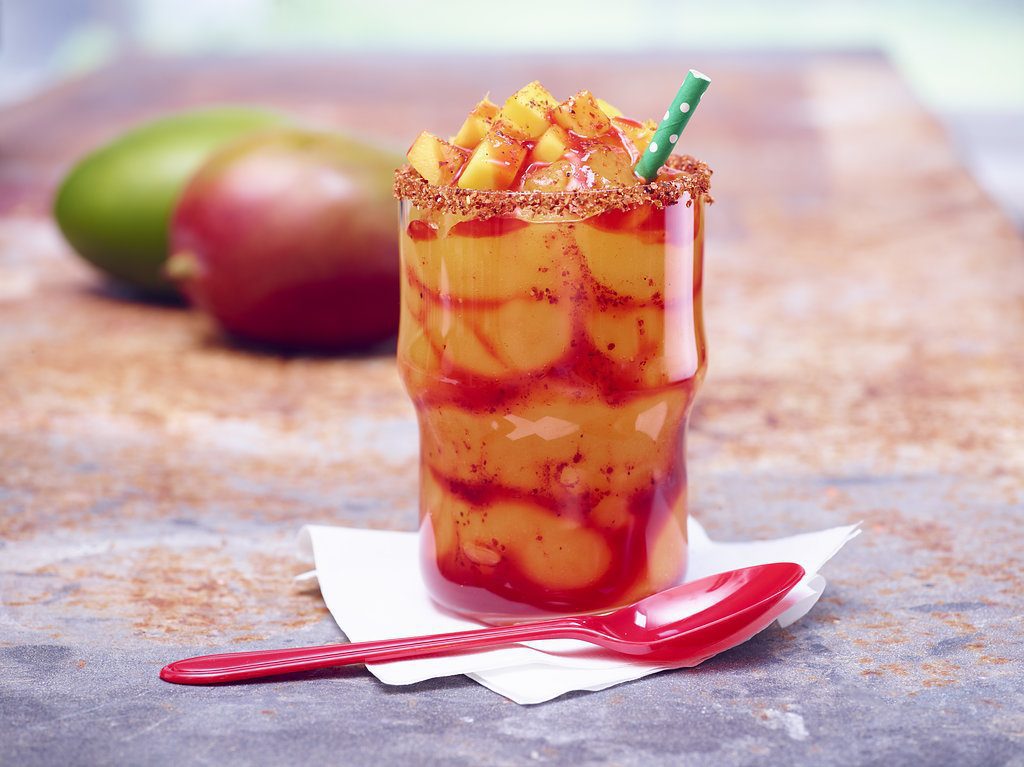
Few drinks capture the spirit of a sunny afternoon quite like a chamoy-mango cup — better known as a mangonada. This Mexican icon layers slushy ripe mango with tangy-spicy chamoy, a dusting of Tajín, fresh lime, and a tamarind candy straw that doubles as the spoon. It’s sweet, sour, salty, and spicy in every sip. And it lives or dies by the quality of the mango.
This guide walks you through three standout mangonada recipes from mango.org’s recipe collection, then covers everything you need to know to pick, prep, store, and feel good about the fruit you put in the cup.

Three Mangonadas to Try
Mexican Mangonada — the classic, single-serve build
For one perfectly composed glass, the Mexican Mangonada from Bar & Beverage Specialist Tony Pereyra is the place to start. Fresh mango cubes, mango nectar, lime juice, and agave go into the blender for about five minutes, while a Tall Collins glass is rimmed with chamoy and Tajín, drizzled with more chamoy, and finished with extra mango cubes, a sprinkle of Tajín, and a tamarind candy. It’s quick, photogenic, and the easiest way to see why the chamoy-mango cup became a street-food legend.
Mangonada — Chef Dave Woolley’s party batch
When you’re feeding a crowd, Chef Dave Woolley’s Mangonada recipe scales beautifully to 64 servings. The trick: dice six cups of very ripe mango, freeze it partially for about 90 minutes, then blend in batches with a water-agave mixture, fresh lime juice, and ice. Each glass is swirled with chamoy and Tajín, topped with the slushy mango blend, more fresh mango, and a tamarindo straw. Twenty minutes of prep gets you a full party’s worth of frosty cups.
Ginger Mangonada — the elevated, chef-driven version
For something more layered, the Ginger Mangonada from Chef Eric Stein of Church’s Texas Chicken features a “mango-turmeric sorbet” and a “mango-ginger smoothie,” then stacks them with chamoy and serves them in Tajín-rimmed glasses, with candied ginger, tamarind candy straws, and an immunity-boosting syrup floated on top. The chef calls it “kind of like drinking liquid sunshine” and notes that mangos contain over 20 different vitamins and minerals that nourish the body — a thread we’ll pick up below.

How to Choose the Right Mango for Your Mangonada
A great mangonada starts with great fruit, and choosing one is more about feel than color. According to mango.org’s How to Choose a Mango guide, color is not the best indicator of ripeness — mango varieties come in a multitude of greens, yellows, and reds, and red blush, in particular, is no signal of how ripe the fruit is. Instead, give the mango a gentle squeeze: a ripe mango will yield slightly, a medium-ripe one will feel somewhat firm, and an unripe mango will be very firm to the touch. Lean on the same instincts you’d use with peaches or avocados. Ripe mangos sometimes have a fruity aroma at the stem end, which is one of the most reliable cues.
For every mangonada on this list, you want fully ripe, fragrant fruit — the natural sweetness is what balances the salty chamoy and the chili-lime bite of Tajín. If you’re shopping ahead, the Mango Varieties & Availability page is a handy reference for matching the time of year to the variety you’re likely to find.
How to Cut a Mango Without Losing Half of It to the Pit
A mango has a long, flat seed running down the center, and once you know how to work around it, the rest is easy. The How to Cut a Mango guide on mango.org walks through the three most popular approaches. Always wash the mango before cutting, and use a clean knife and cutting board.
For the slice-and-scoop method that mangonada recipes call for, stand the mango on the cutting board, slice down each side just past the seed (about a quarter inch off-center) to remove the two “cheeks,” score the flesh in a grid pattern without cutting through the skin, then scoop out the cubes with a large spoon. The result is clean, uniform dice — exactly what you want for both the blender and the garnish on top. For very ripe fruit (which a mangonada calls for), a large spoon can also peel the mango on its own; for firmer mangos, a vegetable peeler or a knife works best.
How to Store Your Mangos — From Counter to Fridge to Freezer
Once you’ve chosen great mangos, proper storage determines whether they peak on the day you want them. Mango.org’s FAQ page outlines a few simple rules worth memorizing.
Counter for ripening. Mangos sold in the U.S. are typically ripened at 68–72°F using their own ethylene gas. If you need to speed things up, place the fruit in a closed paper bag — the trapped ethylene accelerates ripening.
Fridge once ripe. Once a mango is fully ripe, refrigerate it to prevent further ripening. Ripe mangos keep whole in the refrigerator for up to five days, or two to three days when cut or pureed. For more, see the guide to ripening and storing mangos.
Freezer for the long haul. Extra-ripe mangos can be frozen, either cut or pureed, for up to six months — perfect for mangonada-ready fruit on demand. Wash, slice, and dice your ripe mangos, spread the pieces on a flat baking sheet, cover with plastic wrap, and freeze. Once solid, transfer to an airtight freezer bag or container. (You can also puree the fruit and freeze it in a sealed container.) That partially frozen step in Chef Dave Woolley’s batch mangonada becomes much easier when you already have fruit in the freezer.
Why a Mangonada Is Actually a Pretty Smart Treat
Beyond flavor, the fruit at the heart of this drink offers real nutritional value. According to the Mango Nutrition Facts Label, a ¾-cup serving of fresh mango is among the richest sources of vitamin C, providing 50% of the daily value. It’s also a good source of folate and copper, contributes 2 grams of fiber (7% DV), and delivers 8% DV of vitamin A — for around 70 calories. The bright yellow flesh signals that mangos contain valuable polyphenols, natural plant compounds that have been the focus of multiple research studies on heart, gut, metabolic, and immune health.
A few more facts worth knowing, all sourced from the mango.org FAQ:
- A ¾-cup serving contains 17 grams of total sugars and zero added sugars — the sweetness comes from naturally occurring fructose, not refined sugar.
- The American Diabetes Association classifies mango as a low-glycemic food, and research has shown it may help maintain normal blood sugar levels — meaning a mangonada built around real fruit (rather than syrups) has a meaningfully better profile than many other frozen treats.
- Mango contains more than 20 vitamins and minerals that support immune, cardiovascular, cognitive, and neurological function. For the full nutritional picture, see the Mango Nutrition Handout and the Nutrition Messages
A homemade mangonada is naturally heavier on real fruit than a street-vendor version that may lean on syrups — which means you keep the flavor and gain nutrition.
Ready to Build Your Own?
Pick your favorite of the three recipes above, squeeze a few mangos at the store, and you’re an afternoon away from a chamoy-mango cup that tastes like it came from a corner paletería. If you need to track down fresh fruit, the Buy Fresh Mangos tool helps you find retailers near you. For more drink and dessert inspiration, the full mango.org recipe section is the rabbit hole worth falling into.
Sources
- Mangonada — Chef Dave Woolley
- Mexican Mangonada — Tony Pereyra
- Ginger Mangonada — Chef Eric Stein
- How to Choose a Mango
- How to Cut a Mango
- Ripening and Storing Mangos
- Mango Nutrition Facts Label
- Mango FAQs
- Mango Varieties & Availability
- Buy Fresh Mangos