Mango at Its Peak: How to Choose, Cut, and Enjoy Fresh Mango This Summer
Late July and early August are prime mango season, making it one of the best times to enjoy fresh fruit at its peak. Whether you’re packing lunches ahead of the school year, feeding a crowd at a cookout, or looking for something refreshing during a heat wave, fresh mango fits right into late-summer meals and snacks.

How to Choose a Mango
The single most common mistake is shopping with your eyes. As the guide on how to choose a mango explains, color is not the best indicator of ripeness — mangos come in a multitude of colors, shapes and sizes, and the red blush you sometimes see tells you nothing about whether the fruit is ready to eat.
Instead, squeeze gently. A ripe mango gives slightly. A medium-ripe mango is somewhat firm. An unripe mango is very firm. If you already shop for peaches and avocados by feel, you have all the skill you need. Ripe mangos will sometimes offer a fruity aroma right at the stem, which is the most enjoyable check of all.
Mangos are also good at every stage of ripeness. Unripe fruit skews sour-tart and holds its shape in salsas and slaws; ripe fruit is naturally sweet and belongs in smoothies and desserts. Buy a mix and you’ll have something ready every day of the week.
How to Cut a Mango
A mango has one long, flat seed in the center. Once you learn to work around it, the rest is easy. Always wash the fruit first, and use a clean knife and cutting board.
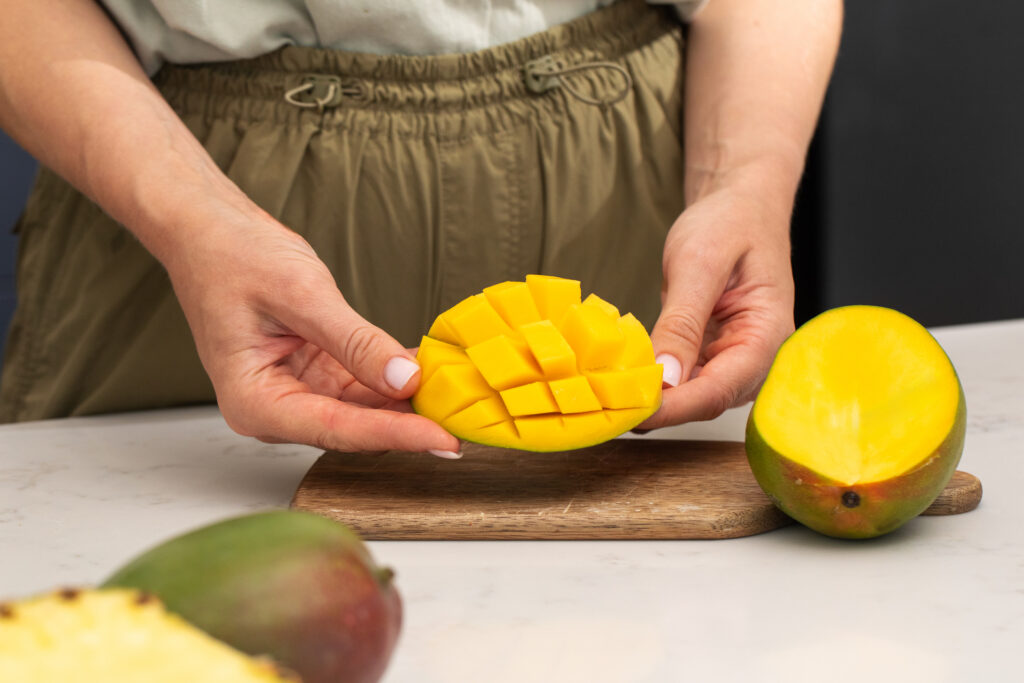
The classic method from the how to cut a mango guide is slice and scoop: cut each side just past the seed, about ¼ inch from the center, slice the flesh without breaking the skin, then scoop out the slices with a large spoon. A mango splitter works if you stand the fruit stem-end down and push straight through. For fully ripe fruit, a large spoon alone will do the job; for firmer, unripe or just-about-ripe mangos, a peeler or a careful knife works better.
Short on time this month? Most retailers stock fresh-cut options in the produce section — spears, cheeks, spirals and noodles, mixed fruit cups and prepared salsas.
Mango Nutrition
Fresh mango is a nutrient-dense fruit that provides vitamin C, vitamin A, fiber, folate and antioxidants to support overall health. It also contains carbohydrates for energy and is naturally fat-free, sodium-free and cholesterol-free.
How many calories are in a mango? A whole mango has about 202 calories. A ¾-cup serving has 70 calories. Each serving provides 19 grams of natural carbohydrates, which offer energizing fuel without a calorie overload.
Fresh mango is naturally fat-free, sodium-free, and cholesterol-free. The calories from mango come with powerful nutrients that support wellness at any age.
One serving provides:
- 50 percent of daily vitamin C
- 8 percent of vitamin A
- 8 percent of vitamin B6
- 7 percent of daily fiber
- 15 percent of daily folate
- 15 percent of daily copper
For a deeper look at how these nutrients support energy, heart health, gut support, and immunity, explore the naturally invigorating nutrition of mangos and the mango nutrition page.
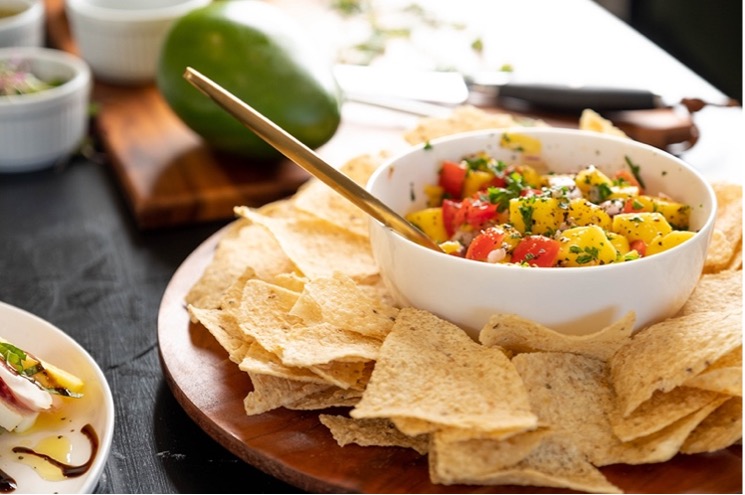
Mango Salsa for Summer Cookouts
August grilling season and mango season overlap perfectly. Mango Salsa 3 Ways covers the range: a smoky chipotle version that blends mango with a mild red salsa, oregano, cumin and chipotles in adobo; a grilled mango corn salsa with avocado, cherry tomatoes, red onion, cilantro, lime and Tajín; and a mango jicama jalapeño salsa with coconut, mint and toasted pepitas. All three come together in about 20 minutes, and the grilled version puts your already-hot grill to work.

Cool Off With Mango Smoothies
When it’s too hot to cook, blend. The mango smoothie collection is stocked for exactly these weeks, including a Watermelon Mango Smoothie Bowl that pairs the season’s two best fruits, a layered “Green & Gold” Mango Kiwi Smoothie, a Coconut Mango Smoothie and the Mango Squishy Smoothie.
Late summer mango season is short. Pick up a few while they’re at their peak, enjoy them fresh, and make the most of the final weeks of summer!