From Produce Bin to Blender: The Complete Fresh Mango Guide
Some fruits are seasonal guests. Mango is a summer resident — the one ingredient that moves effortlessly from the smoothie you blend at sunrise to the salsa you serve at sunset. But between the store and the table, there are two small hurdles: knowing which mango to buy and how to get past that seed. Clear those hurdles, and a whole summer of golden, sweet possibility opens. Here’s the complete playbook.
Select Smart: How to Pick the Perfect Mango
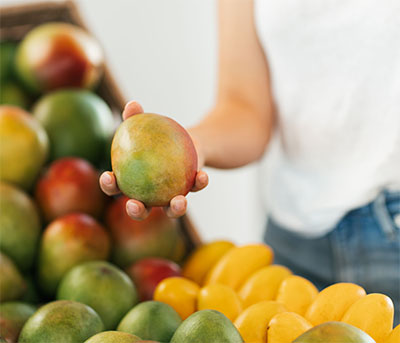
The biggest mango myth is that color equals ripeness. It doesn’t. That rosy red blush is simply a feature of certain varieties, not a signal that the fruit inside is ready. Mangos come in a rainbow of colors, shapes, and sizes, so the produce aisle rewards touch over sight.
Give the fruit a gentle squeeze. A ripe mango yields slightly under your fingers — the same test you’d use on a peach or an avocado. A medium-ripe mango feels somewhat firm, while an unripe one is very firm. There’s a bonus test, too, and it’s the most pleasant one in the grocery store: ripe mangos often carry a sweet, fruity aroma near the stem.
Here’s the part many shoppers miss — every stage of ripeness is useful. Firm, unripe mangos bring a sour-tart snap that shines in slaws and green salads, while fully ripe fruit delivers the honeyed sweetness that smoothies and desserts crave. Buy a few at different stages and let them ripen on the counter as the week unfolds. The full guide to choosing a mango walks through it all, including a ripeness-and-recipe guide that matches each stage to the right dish.
Master the Cut: The Easiest Way Around the Pit
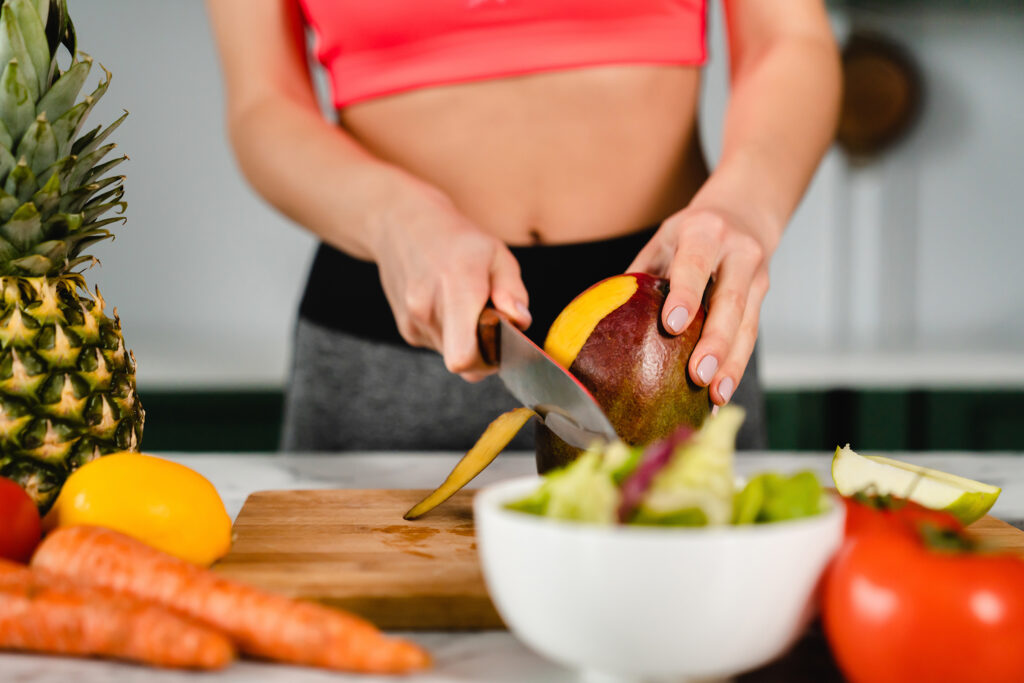
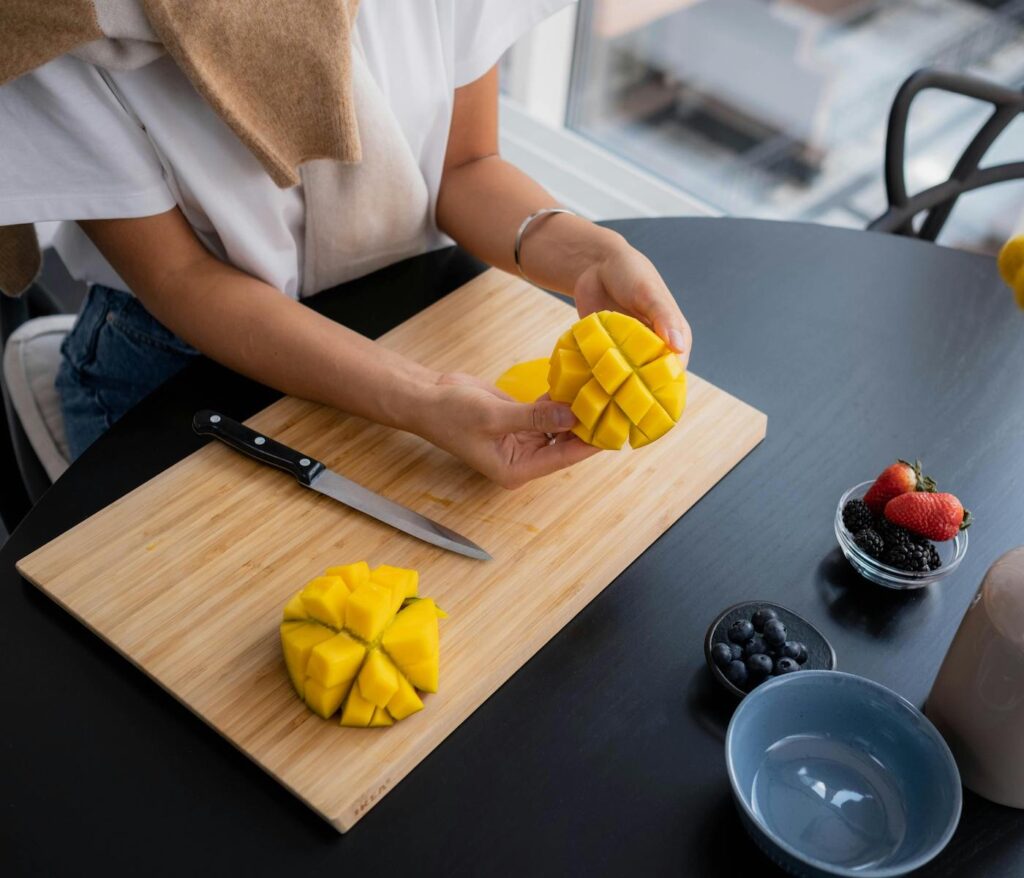
Ask anyone why they don’t eat more fresh mango, and the answer is usually the seed. Fair enough — but the fix takes about thirty seconds to learn. Every mango hides a long, flat seed running through its center. Slice down each side of the fruit about a quarter inch from the middle, and you’ll come away with two generous “cheeks.” Score the flesh in a crosshatch pattern without piercing the skin, then scoop the cubes free with a large spoon. Done.
For peeling, match the method to the fruit: a spoon glides under the skin of a fully ripe mango, while a standard vegetable peeler or knife works better on firmer fruit. The video and step-by-step photos on how to cut a mango make the whole process foolproof — and if you’d rather skip the cutting board entirely, many retailers now sell fresh-cut mango spears, cheeks, and spirals in the produce section.
Nutrition That Earns Its Keep
All that flavor comes with serious substance. A three-quarter-cup serving of mango contains just 70 calories yet delivers more than 20 vitamins, minerals, and antioxidants — including half your daily vitamin C. The fruit’s natural balance of sugars and fiber provides steady, sustained energy rather than a spike and crash, making it an ideal companion for active summer days. Fiber and folate support heart health, and gut-friendly nutrients aid digestion. Mango’s high water content helps keep you hydrated when the temperature climbs. The complete picture is at mango nutrition, including the full nutrition label for the by-the-numbers crowd.

Blend It: Smoothies that Make the Most of Summer
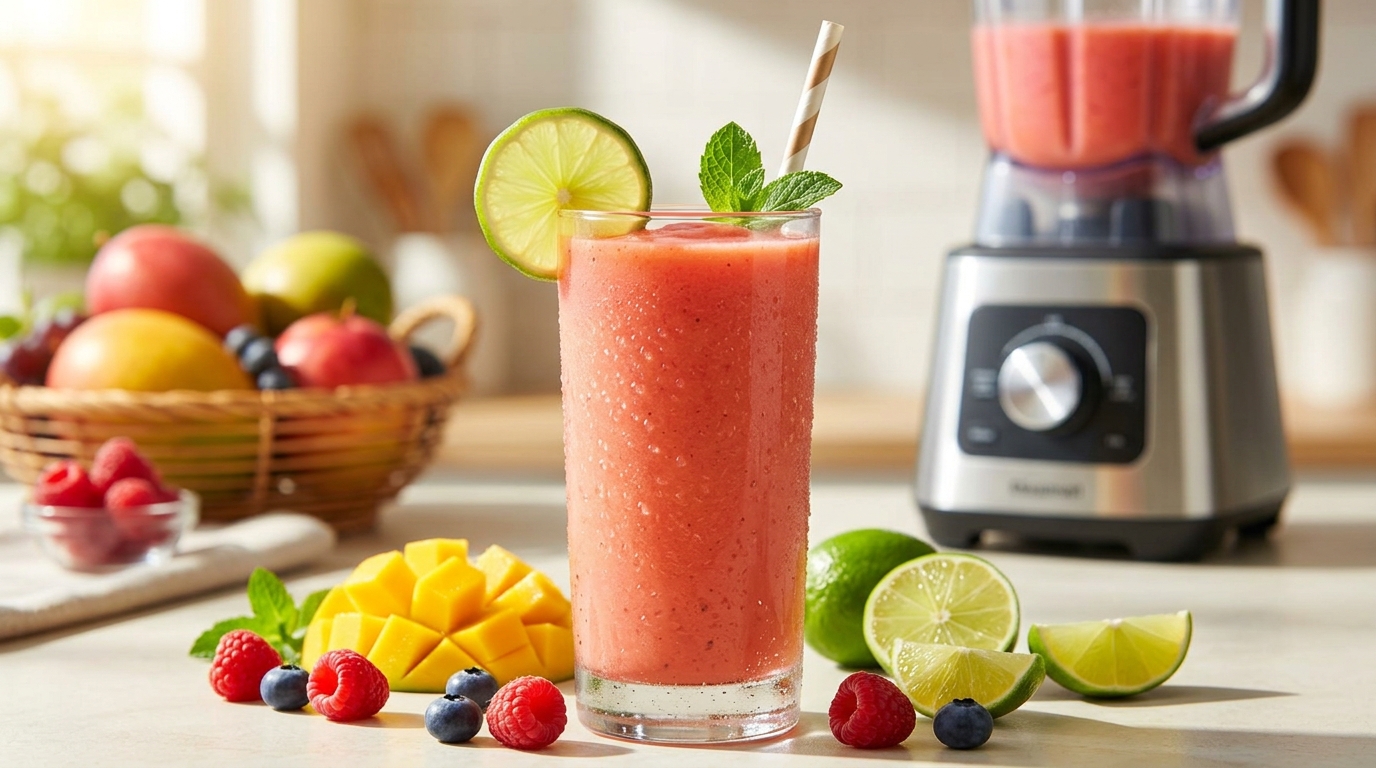
Ripe mango was born for the blender — its creamy, fiber-rich flesh gives smoothies a body that watery fruits can’t match. The smoothie collection runs the full range: the Ultimate Fresh Mango Smoothie Bowl and the Easy Mango Smoothie Bowl with Toppings for spoonable breakfasts; a striking “Green & Gold” Layered Mango Kiwi Smoothie when you want to show off; a Watermelon Mango Smoothie Bowl that doubles down on summer fruit; and a tropical Coconut Mango Smoothie ready in ten minutes. Keep cubed mango in the freezer, and any of these is minutes away.
Scoop, Spoon & Serve: Mango Salsa for Every Cookout
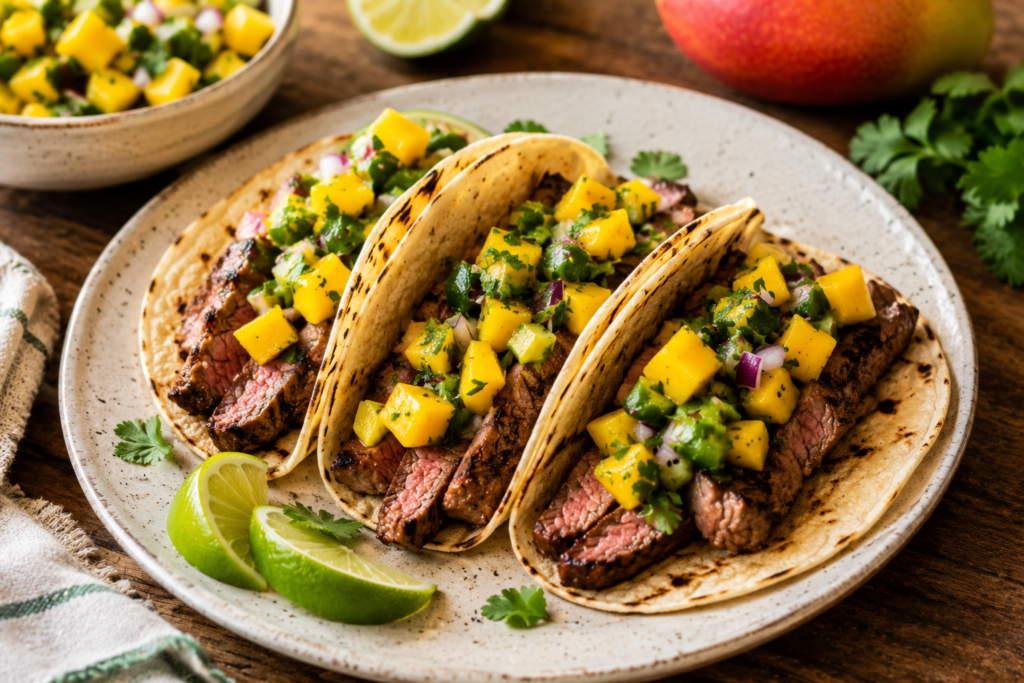
When evening comes, mango shifts from breakfast to the grill. Mango Salsa 3 Ways proves one fruit can cover every cookout mood: a smoky chipotle salsa, blended silky for chips and tacos; a grilled mango and corn salsa with avocado and Tajín, where a few minutes over the flames caramelizes the fruit’s sugars; and a bright mango-jicama-jalapeño salsa with coconut and toasted pepitas for crunch. Each holds up in the fridge for days — though it rarely lasts that long.
The Bottom Line
Pick by feel. Cut around the flat seed. Then blend it at breakfast and scoop it at dinner. One fruit, 70 calories per serving, and a whole summer’s worth of menus — fresh mango does the rest.