Authentic Raw Mango Dal: A Journey Through South Indian Flavors
Spotlight on South Indian Cuisine
What’s dal? At its core, dal is a protein-rich dish made with lentils, a staple across Indian households in many regional variations.
Mangos have a history just as rich. Cultivated for over 4,000 years, they appear in ancient Hindu texts and have long been woven into the culinary traditions of South Asia. While we often associate mango with sweetness, raw (green) mango plays a different role in this dish, bringing brightness and tang to savory dishes.
One of the joys of cooking is exploring new flavors from around the globe, and trying Authentic Raw Mango Dal is a wonderful way to start. It’s nourishing and easy to prepare.

Choosing the Right Mango for the Job
Before any cooking begins, your meal starts in the produce aisle — and with mangos, ripeness matters as much as variety. Raw Mango Dal calls for firm, green mangos that deliver the signature tartness this dish is built on, while the desserts that follow ask for the opposite: fully ripe, fragrant mangos with sweet, juicy flesh. Don’t rely on color alone, since many varieties stay green or golden even at peak ripeness. Instead, give the fruit a gentle squeeze — ripe mangos yield slightly to pressure, much like a peach, while raw mangos feel firm and unyielding. A sweet aroma at the stem end is another reliable sign of ripeness. For a complete guide to picking the perfect mango for any recipe, visit How to Choose a Mango.
Bringing Them Home: How to Cut a Mango
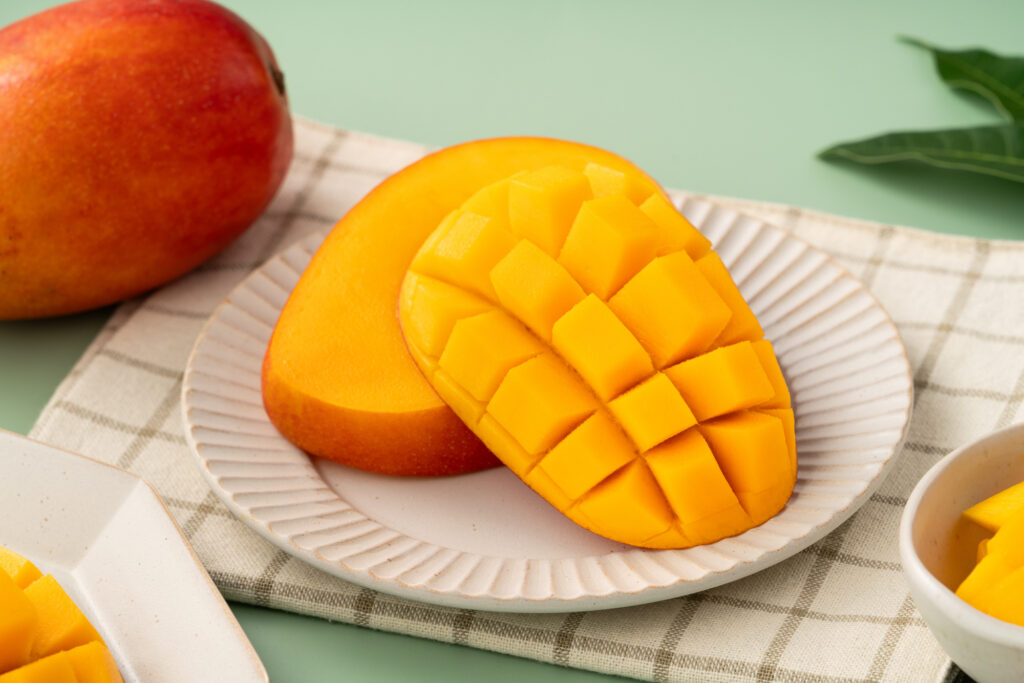
Once your mangos are home and ready, the next step is breaking them down. Mangos have a large, flat pit running through the center, which can make cutting feel intimidating the first time — but with the right technique, it’s quick and surprisingly tidy. Stand the mango on its end, slice down on either side of the pit to remove the two “cheeks,” then score the flesh in a grid pattern and invert the skin to release neat, even cubes. For Raw Mango Dal, you’ll be working through firmer flesh that holds its shape during cooking, so a sturdy knife and a steady cutting board are your best friends. Any unused fruit keeps well in the refrigerator for several days once cut, or you can freeze cubes in a single layer for smoothies and lassis later. Walk through the full step-by-step at How to Cut a Mango.

Finish With Something Sweet
Have extra mango on hand? Turn it into something sweet to round out your meal. End the meal with a delightful and simple no-churn dessert: Mango Kulfi.
Kulfi is a traditional Indian frozen treat, known for being creamier and denser than typical ice cream. What makes this an easy, go-to recipe is that it doesn’t require an ice cream maker. Combine sweetened condensed milk, heavy cream, and ripe mango to create a rich mixture on your stovetop. The cardamom adds warmth and depth to an already wonderful treat. Once cooled, pour it into a freezer-safe dish or popsicle molds for a lovely dessert that’s bound to please.
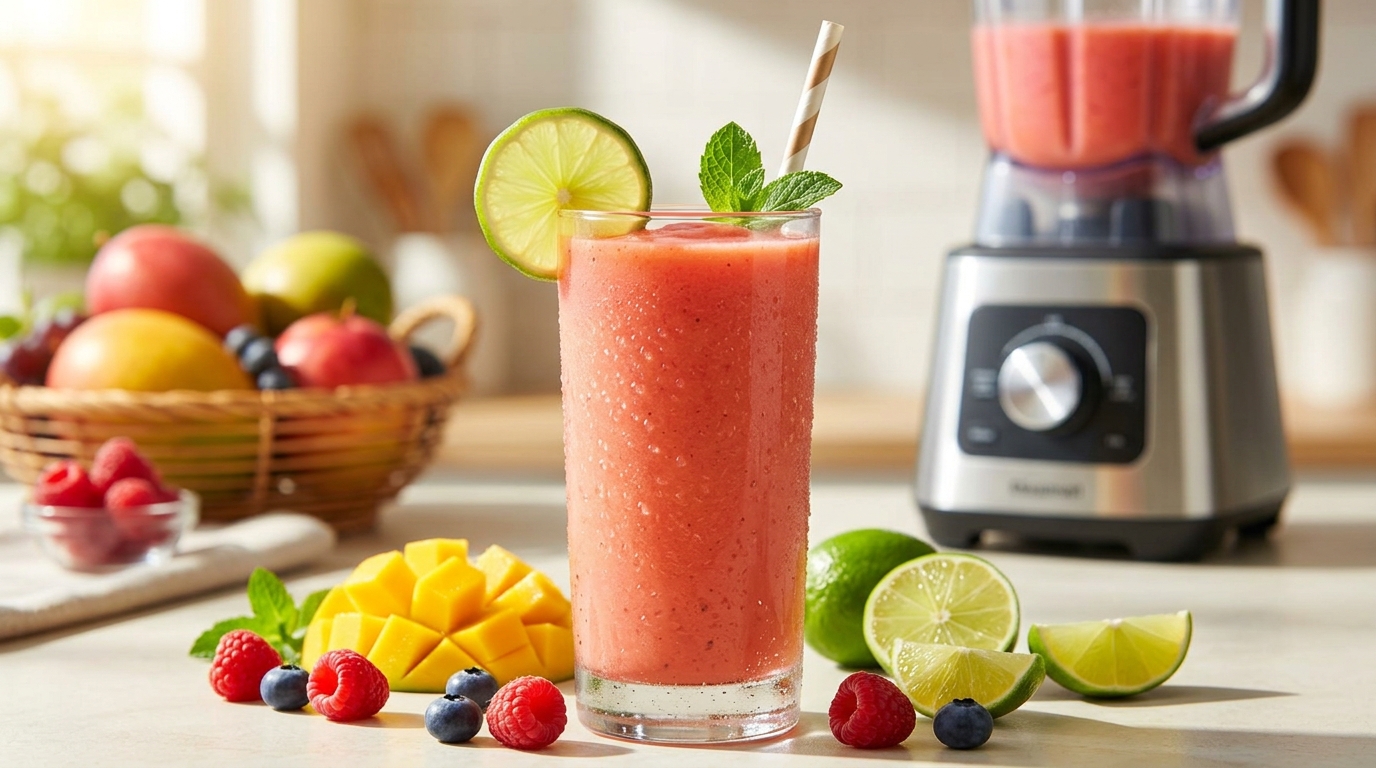
If frozen desserts aren’t your style, there are other delicious ways to enjoy mango at the end of a meal. Try Mango Lassi — a refreshing yogurt-based drink similar to a smoothie — a popular choice for cooling the palate. Blended with ripe mango, yogurt, and a touch of sweetness, it’s light, creamy, and perfect alongside or after a meal.
A Closer Look at Mango Nutrition
Beyond their flavor and versatility, mangos are a true nutritional powerhouse — and one more reason this meal feels as good as it tastes. A single three-quarter-cup serving is fat free, sodium free, and cholesterol free, while delivering an excellent source of vitamin C, a good source of folate and copper, and contributing fiber along with more than 20 different vitamins and minerals — all for around 100 calories. That holds true whether the mango is going into a tangy dal, a creamy kulfi, or a frothy lassi. To see the full breakdown of what’s inside every serving, take a look at the Mango Nutrition Facts Label.
What the Research Says
If you’re curious about how mango fits into a healthy lifestyle, the science is encouraging. The National Mango Board’s 2025 Literature Review surveyed the latest peer-reviewed research connecting mango consumption to potential benefits across heart health, gut health, metabolic health, skin, and cognitive function. The findings reinforce what many cultures have long known intuitively — that mango is more than a treat; it’s a fruit with meaningful nutritional value backed by emerging science. For a deeper look at the evidence, read the 2025 Mango Literature Review Study Summary.
Keep Exploring
For more global recipes — savory, sweet, and everything in between — visit our recipe section.